Condenser Tube Leak Testing: Finding Leaking Tubes and Joints
How to find leaking condenser tubes and rolled joints with vacuum leak detectors, tell a tube leak from a joint leak, and re-roll joints with controlled torque.
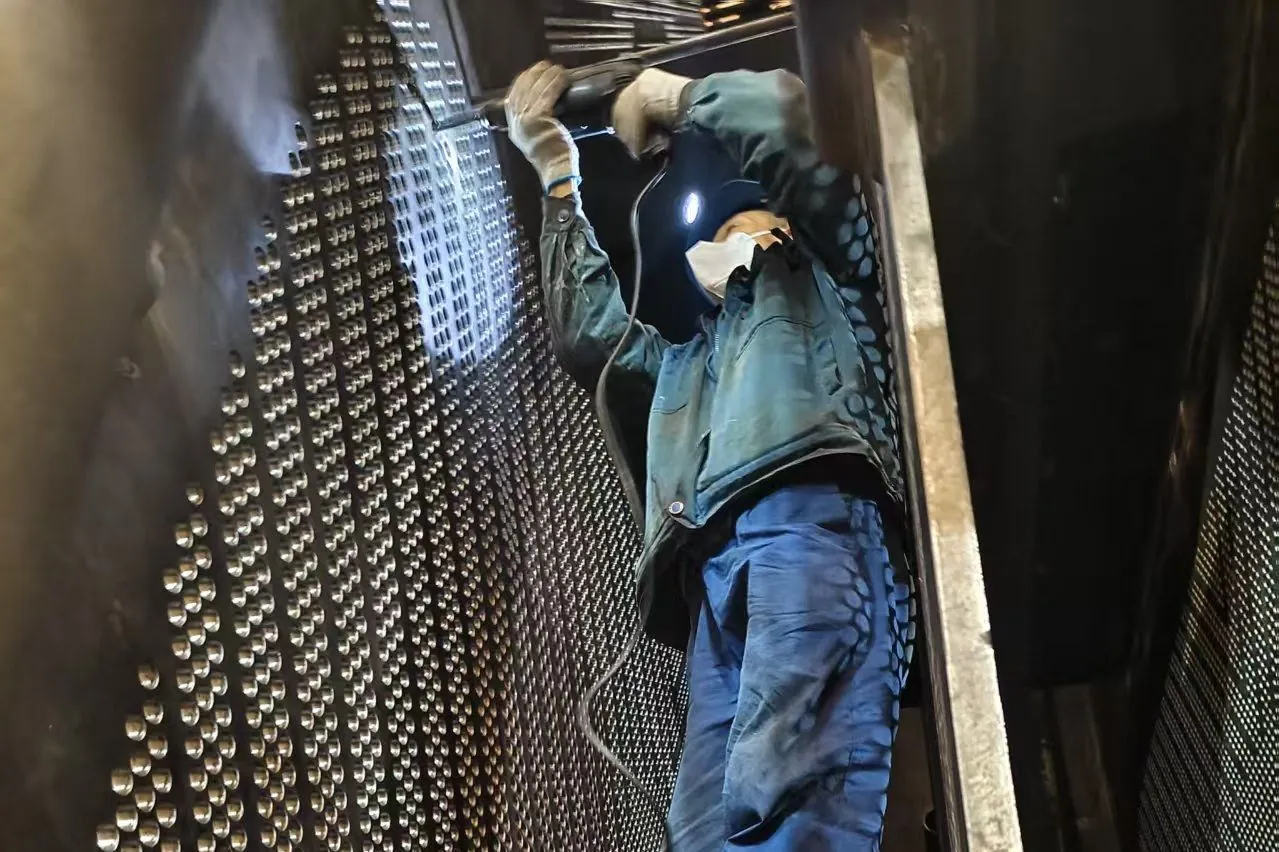
A small leak in a condenser lets cooling water into the condensate. Even a low rate of in-leakage raises conductivity and brings dissolved salts and oxygen into the steam cycle, so plants act quickly when chemistry alarms point to the condenser. The task is to find which tube or which joint is leaking among thousands, fix it, and confirm the repair.
This article covers the two places a condenser leaks, how vacuum leak detectors locate them, and how to repair a leaking rolled joint.
Tube leaks and joint leaks
A condenser can leak in two different places, and they are repaired differently.
- Tube leak: a hole or crack in the tube wall, caused by erosion, corrosion, vibration damage at support plates or impact from debris. The usual repair is to plug both ends of the tube, or replace it.
- Joint leak: a gap between the tube and the tubesheet hole. Causes include under-rolling at installation, loosening from thermal cycling, or a damaged hole. A joint leak can often be repaired by re-rolling.
Testing the whole tube and testing the joint separately tells you which case you have, so you do not plug a good tube or re-roll a joint that was never leaking.
How vacuum leak testing works
Vacuum testing uses compressed air to create a vacuum through a venturi. The detector seals against the tube or the joint area and draws a vacuum. If the vacuum holds, the tested area is tight. If air enters through a leak, the gauge reading falls back. The method needs no tracer gas and works with the condenser drained and the waterbox open.
Testing whole tubes
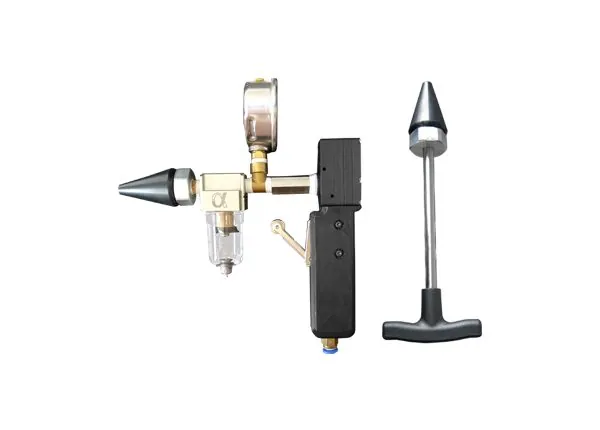
The Vacuum Tube Leak Detector seals on the tube end and draws a vacuum in the tube. It covers tube sizes 6.3–76.2 mm (1/4" to 3"), runs on compressed air at 0.7 MPa and 285 L/min, and weighs 1 kg, so one person can move from tube to tube. Tubes that will not hold vacuum are marked for further checks.
Testing rolled joints
The Vacuum Joint Leak Detector (VJLD) seals around the tube end on the tubesheet face and tests the rolled joint alone. It covers 9.52–31.75 mm (3/8" to 1.25") tubes, uses compressed air at 0.6 MPa and 285 L/min, and weighs 1.5 kg. Use it on tubes that passed the tube test while the plant still sees leakage, and on all joints after a retube.
A practical search sequence
- Narrow the area. Use plant chemistry, waterbox sections and, where available, tracer methods to identify the half or quarter of the condenser that is leaking. Then drain and open that waterbox.
- Clean the tubesheet face. Deposits and biofouling stop the detector from sealing. Brush the face around the tube ends.
- Test tubes. Work systematically row by row with the vacuum tube leak detector and mark the tubesheet so no tube is missed or tested twice.
- Test joints. Run the VJLD on the joints in the suspect area, including joints of tubes that passed the tube test.
- Record. Map each leaking tube and joint on a tubesheet drawing. Repeated failures in one area can point to a cause such as steam impingement or a loose support plate.
Re-rolling leaking joints
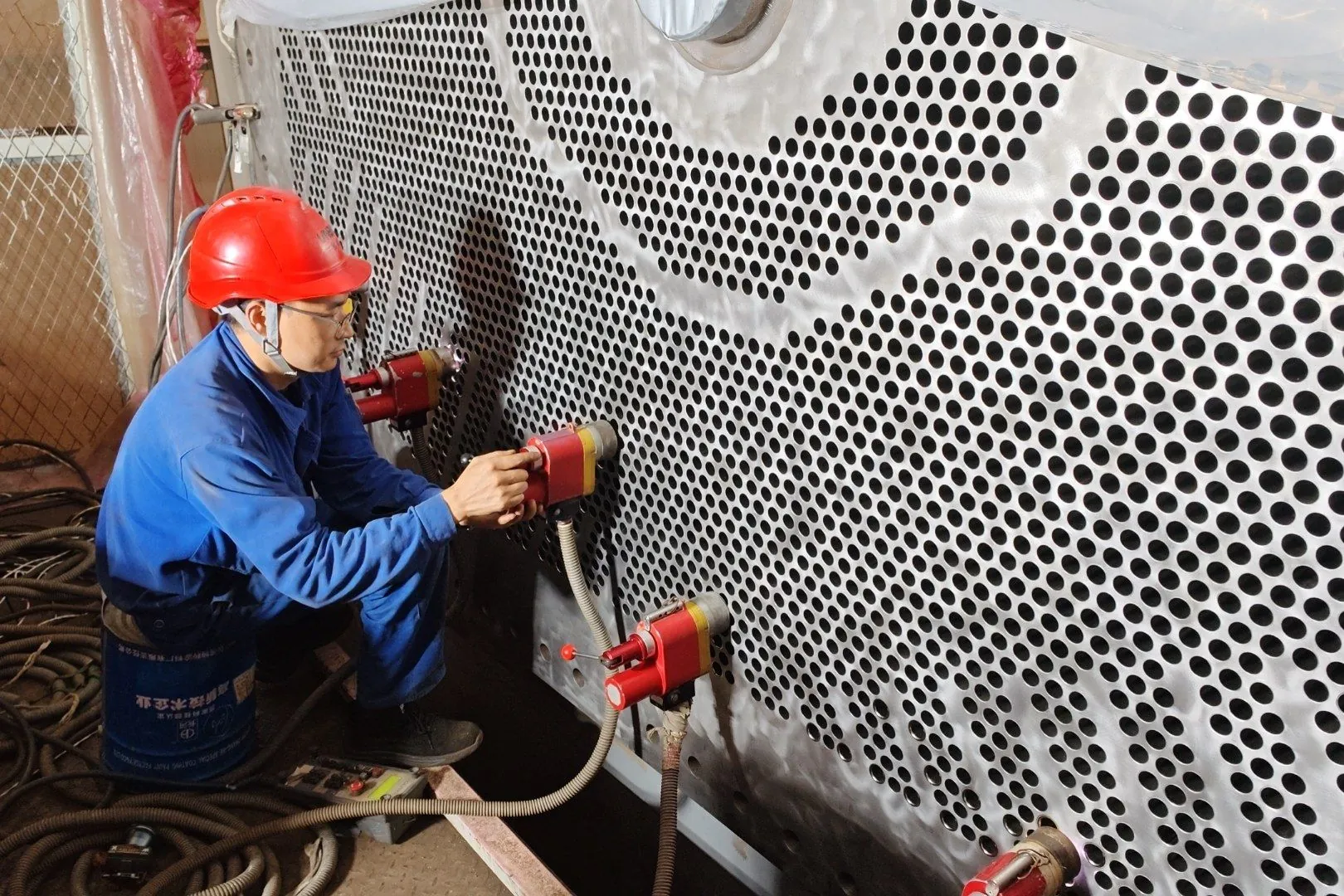
A joint that leaks because it was under-rolled or has relaxed can often be sealed by re-rolling. Points to watch:
- Control the torque. Re-rolling adds wall reduction. Too much thins the tube and work-hardens it, especially with copper alloys and thin titanium walls. A torque-controlled roller such as the SR Series Servo Tube Rolling System (0.2–77.9 N·m, tube OD 6.35–38.1 mm) stops at the set value. The ES2 Series records each rolling on its touch screen, which is useful for documenting repairs.
- Check the result. Measure the tube ID after rolling with a Tube ID Gauge for Rolled Joints (three-point measurement, φ19 / φ25 mm tubes) and compare with the original rolling records.
- Verify the roller. Check the roller output on a TQM Series Torque Tester before the repair work.
- Retest. Test the joint again with the VJLD. A joint that still leaks after a controlled re-roll may have a damaged hole and needs further assessment.
If many joints fail, or tubes are leaking across a wide area, the condenser may be due for a retube. Lanbo supplies the cutting, pulling, hole cleaning, insertion and rolling tools for the full job.
Lanbo tools for this job
- Vacuum Tube Leak Detector — whole-tube testing, 6.3–76.2 mm
- Vacuum Joint Leak Detector (VJLD) — rolled-joint testing, 9.52–31.75 mm
- SR Series Servo Tube Rolling System — controlled re-rolling
- Tube ID Gauge for Rolled Joints — checks expansion after rolling
- TQM Series Torque Tester — verifies roller torque
Tell us the tube size, material and the type of leak you are chasing, and we will suggest a detector and re-rolling setup. Request a quote.
FAQ
What is the difference between the two Lanbo vacuum leak detectors?
The Vacuum Tube Leak Detector tests a whole tube (6.3–76.2 mm, 0.7 MPa air, 1 kg). The VJLD tests the rolled joint at the tubesheet face (9.52–31.75 mm, 0.6 MPa air, 1.5 kg). Using both tells you whether a leak is in the tube or in the joint.
What air supply do the detectors need?
Both run on compressed air at 285 L/min: 0.7 MPa for the vacuum tube leak detector and 0.6 MPa for the VJLD.
Can every leaking joint be fixed by re-rolling?
No. Re-rolling can seal joints that were under-rolled or have relaxed. If the hole is damaged or the tube is already thinned, re-rolling may not seal it, and the tube may need plugging or replacement.
Why does the tubesheet face need cleaning before testing?
The detector has to seal against the tubesheet or tube end. Deposits and biofouling break the seal and give false readings.